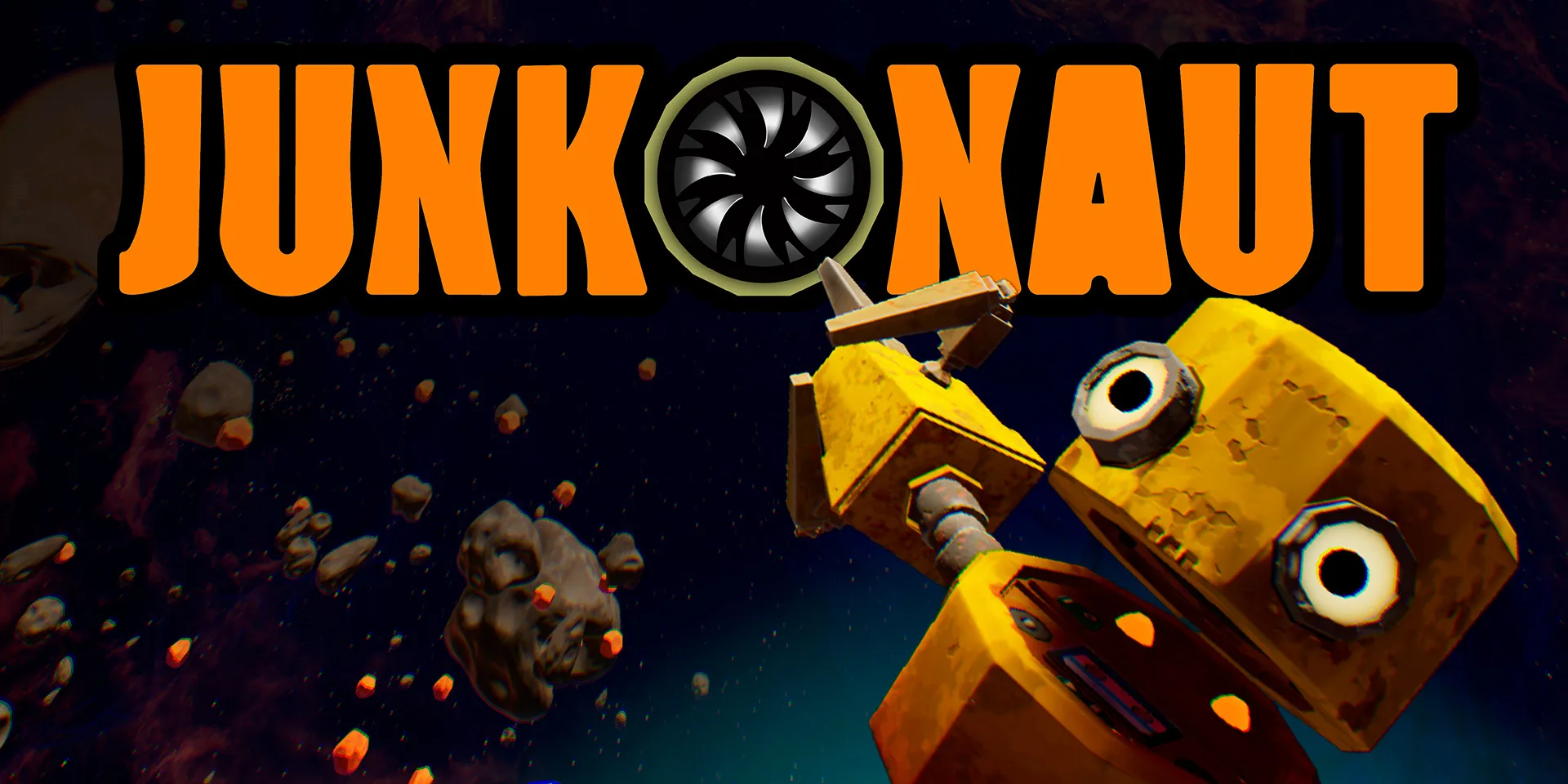
A 3D space-cleanup game where you vacuum junk, grapple across asteroids, and upgrade your equipment while meeting odd clankers.
<Arnau Miragall Torra />
Gameplay Programmer and Game Dev Student
Creating playable worlds, one line of code at a time, refined through playtests
< Tools & Technologies />
< About Me />
Gameplay programmer and game development student building university and personal prototypes in Unity, Unreal Engine, and Phaser. Calm, collaborative, and focused on solid gameplay feel, level design, and thoughtful systems.
Read more about me →< Featured Projects />
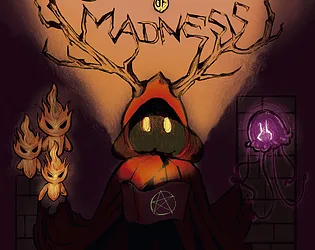
A fast-paced 2D arena roguelite where a fallen wizard fights through a magical tower, absorbing enemy weapons and turning them against increasingly dangerous waves.
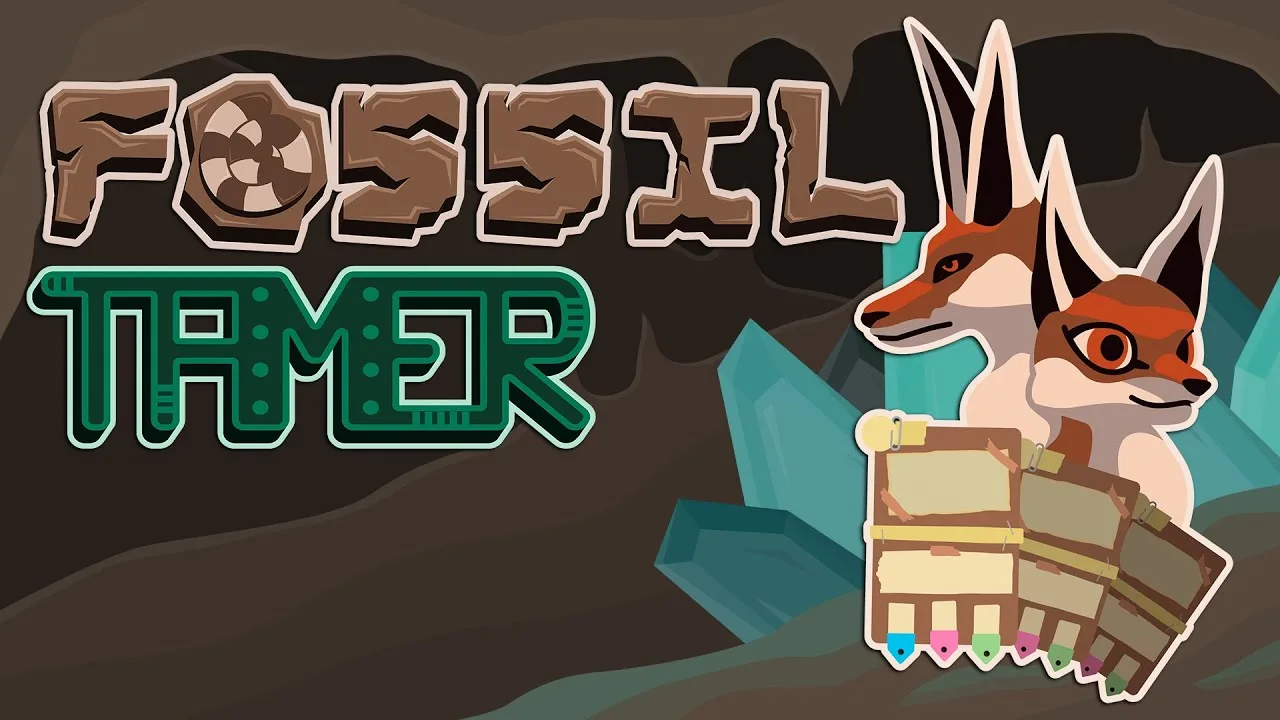
Roguelite deck-building game with creature-collection elements. Explore caverns, revive Fossilmons with unique abilities, and build your deck to escape. Pokémon meets Slay the Spire!
Junkonaut
A 3D space-cleanup game where you vacuum junk, grapple across asteroids, and upgrade your equipment while meeting odd clankers.
Project overview
Junkonaut is built around a simple physical loop: collect space junk, feed it to the Glorious Hole, and use the resulting progression to improve the tools that make the next cleanup run faster and more satisfying.
The project started in my third year as an annual assignment intended to become a vertical slice in roughly five months. After evaluating its potential and the work completed by No Name Yeti, ENTI-UB allowed us to continue development during our fourth year. We are now using the project as the foundation for our final degree projects, building on the previous year’s work while pushing it towards a polished, commercially viable release.
Our team covers programming, design, art and music, with FMOD integrated into the audio workflow. This year, one of our musicians stayed on to complete their final degree project with us, and a classmate joined as Producer. Her work focuses on that role, helping us turn ideas into concrete priorities and set feasible, realistic goals.
My role
The developers rotate between features depending on availability and affinity with each subject. My work has focused mainly on the Grapple Gun, gravity refinement, NPC dialogue and movement, missions, and the inventory and equipment upgrade systems. The latter use DataTables as an internal database for defining and managing the available content.
The Grapple Gun
The Grapple Gun has been the most difficult part of my contributions and the feature with the greatest impact on exploration. Unreal Engine’s Rope Component presented limitations and stability problems that frequently broke immersion, so we decided to build our own rope system.
How the custom rope system works
After many iterations, the system dynamically generates intermediate points that behave as rope folds. Raycasts detect obstacles and create a new point when the rope needs to bend around the environment. Once a point exists, the system checks whether it is still necessary by tracing directly from point A to point C. If that path is clear, the intermediate point B is removed and the iteration stops, limiting changes to a single fold per tick. This keeps only the points required by the current geometry.
The system checks the direction of each segment between points A and B and applies the corresponding force to the player, allowing the rope to directly influence their movement. It also tracks a maximum rope length, updating it as segments are created or removed. When the player exceeds that length, a traction force pulls them back within the constraint.
Movement takes the nearest fold into account, allowing the player to pivot around obstacles and creating behaviour inspired by the response of a real rope.
What comes next
The system still needs significant optimisation and refinement, but its complexity and importance within the game make it a likely focus for my final degree project. I hope to explore collision detection, dynamic point management and the player’s physical response in greater depth while iterating towards a robust, consistent and polished result.
Technologies
- Unreal Engine
- FMOD
- DataTables
Controls
- Vacuum: LMB
- Grapple gun: RMB
- Change shooting mode: Tab, Q or mouse wheel
- Jetpack movement: Space/Shift + WASD
Grimoire of Madness
A fast-paced 2D arena roguelite where a fallen wizard fights through a magical tower, absorbing enemy weapons and turning them against increasingly dangerous waves.
Project overview
Grimoire of Madness is a university vertical slice developed in our second year, from 2023 to 2024, over six months. Our group, Team Slay, consisted of three programmers: one teammate focused on UI and level design, one teammate focused on combat, and me.
Because we were a small team still learning how to find the most effective workflow, our responsibilities naturally overlapped and we all ended up contributing to a broad range of features. That flexibility was essential for keeping the project moving and for turning an ambitious concept into a playable vertical slice within the available time.
My role
My main focus was gameplay systems, player behaviour and lighting, while also supporting the rest of the team wherever needed. Working in a three-person programming team meant that I was involved in several parts of the game’s implementation and had to think about how the individual systems supported the overall combat experience.
Building the game’s identity
We did not have a dedicated art team, so all of the game’s sprites were sourced from Itch.io. We looked for assets that shared a pixel-art sensibility and adapted them when necessary using our limited graphic-design knowledge. The platform offered enough suitable resources for a small student team to create a surprisingly strong visual result without investing money in custom art.
The audio followed a similar approach. We sourced sounds from Soundsnap and other websites providing free-to-use assets. The main challenge was not simply finding individual assets, but making them work together as part of a coherent atmosphere.
Our initial visual direction aimed for a mixture of influences from games such as Cult of the Lamb and Octopath Traveler. Once reduced to a scope we could realistically achieve, that direction became the pixel-art aesthetic and lighting treatment visible in the final build.
Combat design
The hardest part of the project was designing the combat. Grimoire of Madness is an arena roguelite built around fast and frantic encounters in which the player absorbs weapons from defeated enemies with their grimoire and mimics them using limited ammunition.
That premise created a demanding design problem: the combat needed to feel quick and exciting without becoming repetitive, while the enemies needed to provide meaningful challenges without overwhelming the player. We iterated repeatedly on weapon behaviours, ammunition and enemy encounters to find a balance between variety, readability and difficulty.
Designing the Skill Tree
I was responsible for the Skill Tree’s layout, upgrade design and balancing. Upgrades are purchased with the currency earned during arena combat and unlock linear nodes across three different paths: Green magic focuses on healing and health, Black magic focuses on damage, and Blue magic focuses on magical abilities and passive effects.
This system gave the combat a progression layer and encouraged players to develop the wizard according to their preferred playstyle. Active abilities are represented by diamond-shaped nodes, and the player can equip one of them as shown below the selected node’s information. Passive abilities remain active after purchase, creating a persistent foundation for the rest of the run.
Despite the limitations of the visual assets, several iterations helped turn the Skill Tree into an engaging feature and one of the game’s pillars. We refined its layout and feedback until the state of each node and the routes available to the player were clear at a glance. The final result adds diversity and depth to the combat without overwhelming the player with its underlying structure.
Design constraints and iteration
One example of the constraints we faced was the weapon-switching interface. Early in development, we considered a radial menu that would have allowed the player to switch weapons quickly and effectively during combat. Our teachers felt that the feature did not match the level of complexity expected by their target audience and rejected the idea, so we had to adapt the design and redirect development time towards a more conventional approach.
This was frustrating because we believed the radial menu could have been a strong improvement to the gameplay, but it also became part of the project’s learning process. We had to balance our own design goals with external feedback, the expected audience and the realities of a six-month university schedule.
A companion with a purpose
One of the design decisions we liked most was making the player fight alongside their companion rather than treating the grimoire as a simple weapon interface. Having a living book follow the player wherever they go reduces the pressure of a difficult combat adventure and makes the experience feel more dynamic and personal.
We studied games such as Bloody Hell, which uses a halo in a similar companion-like role, while developing a solution that fit Grimoire of Madness’s identity. The grimoire became both a mechanical pillar and an important part of the game’s atmosphere.
Technologies
- Unity
- C#
Controls
- Move: WASD
- Aim and shoot: Mouse
- Switch weapon: 1, 2, Tab or mouse wheel
- Dash: Shift or right click
- Interact: E
Fossil Tamer
Roguelite deck-building game with creature-collection elements. Explore caverns, revive Fossilmons with unique abilities, and build your deck to escape. Pokémon meets Slay the Spire!
Overview
A roguelite deck-builder with creature-collection elements. Explore mysterious caverns, revive Fossilmons and use their unique abilities to find a way out.
Highlights
- Roguelite exploration through caverns
- Deck-building combat structure
- Creature collection through revived Fossilmons
- Development build with public feedback encouraged
Technologies
- Unity
Challenges
- The itch.io page presents the game as a development build with unfinished explanations and possible bugs.
< About Me & My Work />
DDVJA — Degree in Video Game Design and Development
ENTI-UB (Barcelona) · 2023 — Present
DAM-VIOD — Cross-platform Application Development
ENTI-UB (Barcelona) · 2021 — 2023
Bachillerato Tecnológico
INS Leonardo da Vinci (Sant Cugat del Vallès) · 2019 — 2021
Calm and introverted, so I listen first and share honest feedback when it helps the project. Used to university teams (3-8 people) working with Agile methods (Scrum/Kanban) and tools like Jira, GitLab, and GitHub. I enjoy bridging gameplay programming, game design, and production to keep the vision coherent.
< Play />
A small rope toy
Built on the same idea as the grapple gun I made for Junkonaut. Hold on an anchor (+) to latch and swing, let go to fly, and collect the scrap (*).
Mouse or touch: hold on an anchor. Keyboard: Space to latch, arrows to steer, Esc to quit.
< Contact />
----------------------->
--\ /---\ /---\ /---\ /---\ /---\ /---\ /---\ /---\ /----
<== X X X X X X X X X
--/ \---/ \---/ \---/ \---/ \---/ \---/ \---/ \---/ \----
-----------------------> -------->
-- /--\ /--\ /--\ /--\ /----
<== X X X X X
-- \--/ \--/ \--/ \--/ \----
--------> Currently a QC Trainee at Ubisoft Barcelona Mobile. Always open to messages, collaborations, and talking about games.